
Geriathletes for Athletic Training
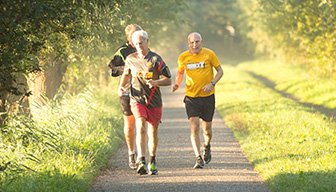
New knees: not just for walking any more…
People are opting to replace damaged joints much sooner than they used to. When joint replacements first became available, they had a relatively short lifespan. Because of this, people waited until they were very debilitated before replacing arthritic joints, and they had to protect their “new” prosthetic joint to preserve its function for as long as possible. With the development of new materials and methods, people can now trust that their replacement joints will last quite a bit longer, and no longer need to be “protected” from “hard work.” That is good news in terms of health and fitness for older individuals…Introducing, the Geriathlete…People returning to sport after joint replacements are the new norm!
While resolving pain is the primary effect of joint replacement, there are some drawbacks to the prosthetic joint that must be addressed before full return to (competitive) sports after joint replacement. Biological (inborn) joints have rich innervation of the joint surface, which provides the individual with sensation of “what is happening” in the joint. Is the knee flexed or extended? One does not need to see their leg to know the answer. But once the (arthritic) joint surface has been removed and replaced with space-age materials in the form of a prosthetic joint, all the nerves that provided that feedback are no longer doing so. The recipient of that new knee (or hip) must learn all over again, using new information (for example, from muscle activity above and below the joint) to determine what position the joint is in. This “proprioceptive retraining” is essential to safe return to high-level activities such as the quick direction changes or impact activities that are part of many sports.
Using the LiteGait with FlexAble yoke, you can safely train high-level activities such as running, jumping and landing with safe impact absorption or “braking” to control the movement and enhance the sensory feedback provided by the limb. This training can help ensure safety while progressing from the “slower” activities such as walking to more vigorous activities involved in sports participation. Gift your clients the confidence they need before sending them off to successfully return to the field!
Contributing Clinician: Nechama Karman - PT, MS, PCS